
Are you ready to dive into the world of webinars and discover the secrets to measuring their success? Webinars have become a powerful tool for businesses, allowing them to connect with their audience in a more personal and engaging way. But how do you know if your webinars are truly making an impact? That’s where measuring webinar ROI and success metrics comes in. In this article, we will explore the key factors to consider when evaluating the effectiveness of your webinars and how to optimize them for maximum results.
When it comes to webinars, it’s not just about the number of attendees or the length of the session. Success is measured by a variety of factors, such as engagement, lead generation, and ultimately, the return on investment (ROI) they bring. By analyzing these metrics, you can gain valuable insights into the effectiveness of your webinars and make data-driven decisions to improve their performance. So, grab your notepad and let’s uncover the secrets to measuring webinar ROI and success metrics!
Measuring Webinar ROI and Success Metrics
When it comes to measuring the success of your webinars, there are several key metrics to consider. These metrics can help you determine the return on investment (ROI) of your webinars and gauge their overall effectiveness. Some important metrics to track include attendee engagement, lead generation, conversion rates, and revenue generated. By analyzing these metrics, you can gain valuable insights into the impact of your webinars and make data-driven decisions to improve future events.
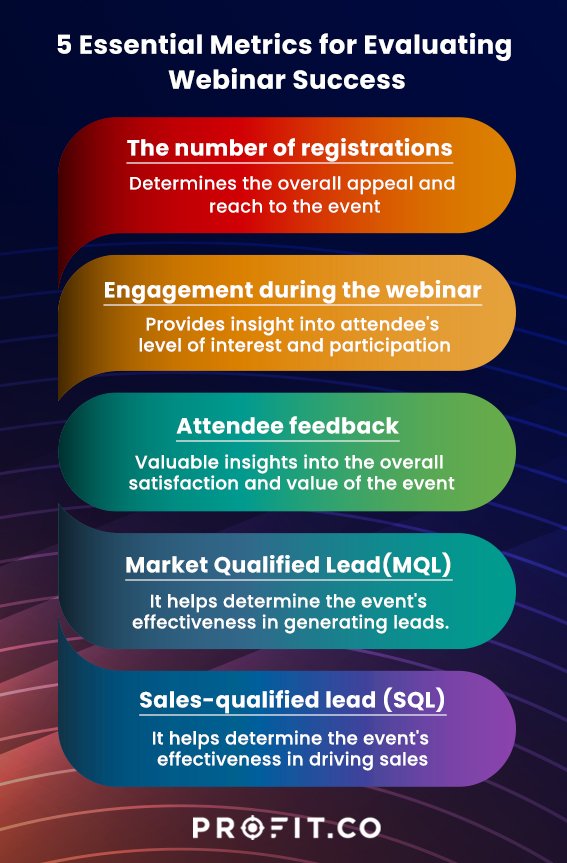
Measuring Webinar ROI and Success Metrics
Webinars have become an integral part of many companies’ marketing strategies, allowing them to connect with their audience in a more personal and interactive way. However, hosting webinars is not just about delivering valuable content; it is also important to measure the return on investment (ROI) and success metrics to ensure that your efforts are paying off. In this article, we will explore the various methods and key metrics that can help you effectively measure the ROI and success of your webinars.
Tracking Registration and Attendance
One of the first steps in measuring webinar ROI is to track the number of registrations and actual attendance. This information provides valuable insights into the overall reach and engagement of your webinar. By comparing the number of registrations to the number of attendees, you can determine the conversion rate and identify any potential drop-off points in the registration process.
Additionally, tracking attendance allows you to assess the level of interest and engagement among your audience. Higher attendance rates indicate that your webinar content is resonating with your target audience, while low attendance rates may call for adjustments in your marketing or content strategy.
Monitoring Engagement During the Webinar
Beyond attendance, it is important to monitor engagement during the webinar itself. This can be done through various metrics such as chat participation, poll responses, and questions asked. These metrics provide insights into how well your audience is interacting with the content and whether they find it valuable and engaging.
By analyzing engagement metrics, you can identify areas where participants may have lost interest or experienced difficulties. This information can help you make improvements in future webinars to ensure a higher level of engagement and satisfaction among your audience.
Evaluating Post-Webinar Surveys and Feedback
Post-webinar surveys and feedback forms are valuable tools for measuring the success of your webinar. By asking participants to provide feedback on various aspects such as content relevance, speaker effectiveness, and overall satisfaction, you can gain valuable insights into the impact of your webinar.
Analyzing survey responses and feedback can help you identify strengths and weaknesses in your webinar strategy. It can also highlight areas where improvements can be made to enhance the overall attendee experience. This feedback is crucial for refining your webinar approach and ensuring future success.
Calculating ROI
To measure the ROI of your webinar, you need to consider both the costs involved in hosting the webinar and the benefits derived from it. The costs may include expenses such as platform fees, speaker fees, marketing costs, and production costs. On the other hand, the benefits can be measured in terms of increased leads, conversions, sales, or brand awareness.
To calculate the ROI, you can use the following formula:
ROI = (Benefits – Costs) / Costs * 100
By quantifying the financial impact of your webinar, you can determine its effectiveness and make informed decisions about future investments in webinars.
Key Success Metrics
In addition to ROI, there are several other key metrics that can help you gauge the success of your webinars. These include:
- Lead Generation: Measure the number of leads generated through your webinar and track their conversion rates.
- Social Media Engagement: Monitor the level of engagement on social media platforms during and after your webinar.
- Content Downloads: Track the number of times your webinar content is downloaded or accessed after the live event.
- Repeat Attendance: Assess the percentage of attendees who return for future webinars, indicating their satisfaction and interest in your content.
- Conversion Rates: Measure the percentage of attendees who take a desired action, such as making a purchase or signing up for a newsletter.
These metrics provide a comprehensive view of the impact and success of your webinars, helping you make data-driven decisions and optimize your webinar strategy for better results.
Conclusion
Measuring the ROI and success metrics of your webinars is crucial for evaluating the effectiveness of your efforts and making informed decisions for future improvements. By tracking registration and attendance, monitoring engagement during the webinar, evaluating post-webinar feedback, calculating ROI, and considering key success metrics, you can gain valuable insights into the impact of your webinars and drive better results. Remember to regularly analyze and refine your webinar strategy to ensure continued success and engagement with your audience.
Key Takeaways: Measuring Webinar ROI and Success Metrics
- 1. Webinar ROI can be measured by tracking registration rates, attendance rates, and conversion rates.
- 2. Success metrics for webinars include engagement levels, feedback surveys, and lead generation.
- 3. It’s important to set clear goals and objectives for your webinars to measure their success effectively.
- 4. Monitoring attendee behavior and interactions during the webinar can provide valuable insights for measuring success.
- 5. Use analytics tools to track and analyze webinar data, such as attendee demographics and viewing patterns.
Frequently Asked Questions
How can I measure the ROI of a webinar?
Measuring the return on investment (ROI) of a webinar involves tracking various metrics to determine the success and impact of the event. Here are some key steps to help you measure webinar ROI:
1. Define your objectives: Before the webinar, clearly outline your goals and objectives. Are you looking to generate leads, increase sales, or educate your audience? Identifying your objectives will help you choose the right metrics to measure.
2. Track registration and attendance: Monitor the number of registrations and actual attendance to assess the level of interest in your webinar. This data will give you an idea of the reach and engagement of your audience.
3. Measure lead generation: If lead generation is one of your goals, track the number and quality of leads generated through the webinar. Use registration forms, surveys, or post-webinar follow-ups to collect lead data.
4. Analyze audience engagement: Assess the level of engagement during the webinar by monitoring metrics such as average viewing time, questions asked, and chat participation. Higher engagement indicates a successful webinar that has captured audience attention.
5. Evaluate conversion rates: Measure conversions that occurred as a direct result of the webinar. This could include purchases, sign-ups, or downloads. Compare the conversion rates to your objectives to determine the webinar’s effectiveness.
What are some success metrics to consider for webinars?
When evaluating the success of a webinar, it’s important to consider various metrics that provide insights into different aspects of performance. Here are some key success metrics to consider:
1. Attendance rate: The percentage of registered participants who attended the webinar. A higher attendance rate indicates strong interest and engagement from your audience.
2. Engagement metrics: Assess the level of audience engagement during the webinar by analyzing metrics such as questions asked, chat participation, and poll responses. Higher engagement signifies that the content resonated well with the audience.
3. Conversion rate: Measure the percentage of attendees who took a desired action, such as making a purchase or signing up for a newsletter. This metric indicates the effectiveness of the webinar in driving desired outcomes.
4. Feedback and satisfaction: Collect feedback from attendees through surveys or post-webinar evaluations. Assess their satisfaction levels, whether they found the content valuable, and if they would recommend the webinar to others.
5. Lead generation: Evaluate the number and quality of leads generated through the webinar. This metric helps determine the webinar’s impact on expanding your customer base and generating potential business opportunities.
Final Summary: Measuring Webinar ROI and Success Metrics
Now that we’ve explored the ins and outs of measuring webinar ROI and success metrics, it’s clear that these factors are crucial for any business looking to maximize the value of their online events. By implementing effective measurement strategies and leveraging the right metrics, companies can gain valuable insights into the impact of their webinars and make data-driven decisions to improve future outcomes.
One key takeaway is the importance of setting clear goals and objectives for your webinars. Whether it’s increasing brand awareness, generating leads, or driving sales, having a specific purpose in mind will allow you to tailor your metrics accordingly. Remember, it’s not just about the number of attendees or views, but rather the quality of engagement and the impact on your bottom line. By tracking metrics such as conversion rates, revenue generated, and customer feedback, you can assess the true success of your webinars and refine your strategies moving forward.
Another crucial aspect to consider is the power of integration and automation. By leveraging tools and platforms that seamlessly integrate with your webinar software, you can streamline the measurement process and gather valuable data effortlessly. This not only saves time and resources but also provides a comprehensive view of your webinar performance across different channels and touchpoints. Additionally, automation features can help you track attendee behavior, measure engagement levels, and follow up with leads, further enhancing your ability to measure ROI and success.
In conclusion, measuring webinar ROI and success metrics is an essential practice for businesses seeking to optimize their online events. By setting clear goals, leveraging the right metrics, and utilizing integration and automation tools, companies can gain valuable insights and make data-driven decisions to improve their webinar strategies. So, go ahead, implement these practices, and watch your webinars soar to new heights of success!