
Hey there! Have you ever wondered about the differences between webinars and podcasts? Well, you’re in luck because today we’re going to dive into this topic and explore the unique characteristics of these two popular forms of digital content. So, grab a cup of coffee and get ready to learn!
Webinars and podcasts have become increasingly popular in recent years, offering valuable information and entertainment to audiences around the world. While they both serve as platforms for sharing knowledge and engaging with listeners, there are some key distinctions between the two. So, let’s break it down, shall we?
When it comes to webinars, think of them as virtual seminars or workshops that take place in real-time. They often involve a live presentation or discussion where experts share their insights on a specific topic. Webinars are typically interactive, allowing participants to ask questions, provide feedback, and engage with the presenter and other attendees. They are a fantastic way to learn from industry leaders, gain new skills, and connect with like-minded individuals.
On the other hand, podcasts are more like on-demand radio shows that you can listen to whenever and wherever you want. They usually consist of pre-recorded episodes that cover a wide range of topics, from storytelling and interviews to educational content and entertainment. Podcasts offer a convenient way to stay informed and entertained while going about your daily activities. Whether you’re commuting, working out, or simply relaxing at home, podcasts are there to keep you company and expand your knowledge.
So, now that we have a basic understanding of what webinars and podcasts are, let’s dig deeper into their unique features and explore the benefits they offer. Get ready to discover a whole new world of digital content!
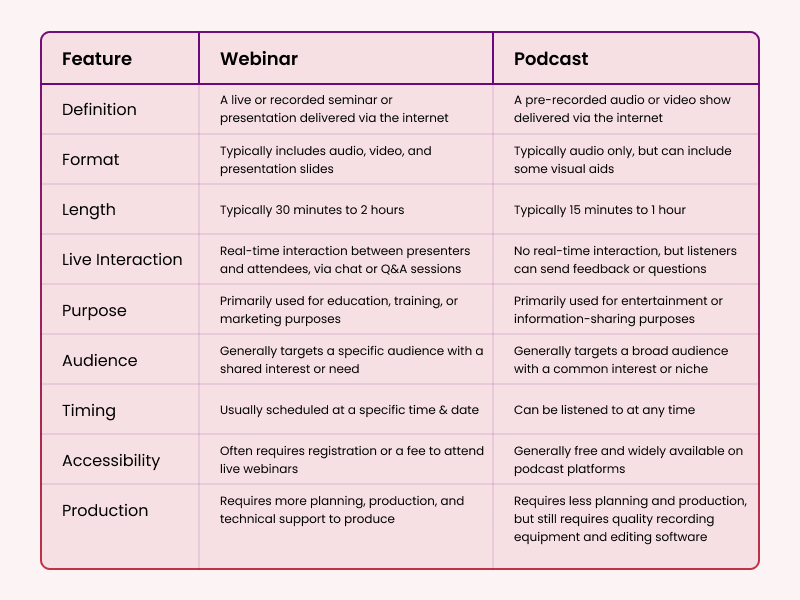
What are the Differences Between Webinars and Podcasts?
Webinars and podcasts are both popular forms of digital content that have gained significant popularity in recent years. While they both offer valuable information and entertainment, there are distinct differences between the two. In this article, we will explore the unique characteristics of webinars and podcasts, their purposes, and how they can be utilized effectively.
Webinars: Engaging and Interactive Online Events
Webinars, short for web seminars, are live online events that allow participants to engage with the presenter and other attendees in real-time. They are typically used for educational and informational purposes, providing a platform for experts to share their knowledge on a specific topic. Webinars often include presentations, demonstrations, and interactive elements such as polls, Q&A sessions, and chat features.
One of the key advantages of webinars is the ability to foster direct interaction between the presenter and the audience. Participants can ask questions, share their thoughts, and receive immediate feedback. This level of engagement creates a dynamic learning environment and allows for a deeper understanding of the topic being discussed. Webinars are commonly used for training sessions, workshops, product demonstrations, and collaborative discussions among professionals.
The Benefits of Webinars
Webinars offer several benefits that make them an effective tool for knowledge sharing and collaboration. Firstly, they provide a convenient way to access valuable information from the comfort of your own home or office. Unlike physical events, webinars can be attended from anywhere with an internet connection, eliminating the need for travel and accommodation expenses.
Additionally, webinars often provide recordings or downloadable materials, allowing participants to revisit the content at their own pace. This flexibility is especially useful for individuals with busy schedules or those in different time zones. Moreover, webinars can attract a global audience, breaking down geographical barriers and connecting people from diverse backgrounds.
Best Practices for Hosting a Successful Webinar
To ensure a successful webinar experience, there are several best practices to consider. Firstly, it’s important to choose a topic that is relevant and valuable to your target audience. Research their interests and pain points to create content that resonates with them. Additionally, effective promotion through email marketing, social media, and targeted advertising can help maximize attendance.
During the webinar, it’s crucial to engage participants through interactive elements such as polls, quizzes, and open discussions. This encourages active participation and enhances the learning experience. Moreover, providing clear and concise visuals, along with well-prepared content, ensures that the information is easily understandable and memorable.
Podcasts: On-Demand Audio Entertainment and Education
Podcasts, on the other hand, are audio-based content that can be streamed or downloaded for on-demand listening. They are typically episodic and cover a wide range of topics, including entertainment, education, news, and storytelling. Podcasts are usually hosted by experts or enthusiasts in their respective fields, providing insights, interviews, and discussions on various subjects.
Unlike webinars, podcasts do not require real-time interaction. Listeners can access episodes at their convenience, making them ideal for multitasking activities such as commuting, exercising, or doing household chores. Podcasts offer a more passive listening experience, allowing individuals to absorb information or enjoy entertainment without the need for active engagement.
The Benefits of Podcasts
Podcasts have gained immense popularity due to their convenience and versatility. They offer a form of entertainment and education that can be enjoyed anytime, anywhere. With a vast array of podcast genres available, listeners can easily find content that aligns with their interests and preferences. Whether it’s learning about a specific industry, staying up-to-date on current events, or exploring personal development topics, podcasts provide a wealth of knowledge and inspiration.
Furthermore, podcasts often feature interviews with industry experts, providing unique insights and perspectives. These conversations can be valuable for professionals seeking to expand their knowledge and stay informed about the latest trends and developments in their field. Additionally, podcasts can help individuals improve their listening skills, language proficiency, and overall mental stimulation.
Tips for Creating an Engaging Podcast
If you’re considering starting your own podcast, there are a few tips to keep in mind. Firstly, define your target audience and niche to ensure that your content appeals to a specific group of listeners. This will help you tailor your episodes and attract a dedicated following. Additionally, invest in quality audio equipment and editing software to ensure a professional sound quality.
Consistency is key in podcasting, so establish a regular release schedule to keep your audience engaged and coming back for more. Engage with your listeners by encouraging feedback, answering questions, and featuring guest speakers to provide diverse perspectives. Finally, promote your podcast through social media, online communities, and collaborations with other podcasters to increase your reach and attract new listeners.
Conclusion
In conclusion, webinars and podcasts are both valuable forms of digital content that serve different purposes. Webinars offer interactive and engaging experiences, allowing for real-time interaction between the presenter and the audience. On the other hand, podcasts provide on-demand audio entertainment and education, catering to the convenience and multitasking nature of listeners. By understanding the unique characteristics and benefits of each, individuals and businesses can effectively utilize webinars and podcasts to share knowledge, engage audiences, and create meaningful connections.
Differences Between Webinars and Podcasts
- Webinars are live online events, while podcasts are pre-recorded audio or video content.
- Webinars often include interactive features like Q&A sessions, polls, and live chat, while podcasts are typically one-way communication.
- Webinars require a scheduled time and date for participants to join, while podcasts can be listened to anytime, anywhere.
- Webinars are great for delivering presentations, training, and workshops, while podcasts are ideal for storytelling, interviews, and entertainment.
- Webinars usually have a specific topic or theme for each session, while podcasts may cover a wide range of topics in each episode.
Frequently Asked Questions
Question 1: How do webinars and podcasts differ in terms of format?
Webinars and podcasts differ in terms of their format. Webinars are live online events where a presenter or a group of presenters deliver a presentation or workshop to an audience. They often include interactive features such as polls, Q&A sessions, and live chat. On the other hand, podcasts are pre-recorded audio or video content that is made available for download or streaming. They are typically episodic and can be listened to or watched at any time.
While webinars offer a real-time experience and allow for direct interaction between presenters and attendees, podcasts offer convenience as they can be consumed on-demand and at the listener’s preferred time.
Question 2: What are the advantages of webinars over podcasts?
Webinars have several advantages over podcasts. Firstly, webinars allow for real-time engagement and interaction. Attendees can ask questions, participate in discussions, and receive immediate feedback from the presenters. This interactive nature of webinars fosters a sense of community and engagement among participants.
Secondly, webinars often provide additional resources such as handouts, slides, or links to further reading materials. These supplementary materials enhance the learning experience and provide attendees with valuable resources to refer back to after the webinar.
Question 3: What are the advantages of podcasts over webinars?
Podcasts offer several advantages over webinars. Firstly, podcasts provide flexibility and convenience. Listeners can choose when and where they want to listen to podcasts, making them suitable for multitasking or for those who have busy schedules. Unlike webinars, podcasts do not require attendees to be present at a specific time.
Secondly, podcasts often feature expert guests or industry leaders who share their insights and experiences. This allows listeners to gain valuable knowledge and perspectives from a wide range of professionals in a specific field. Additionally, podcasts can be easily accessed and subscribed to on various platforms, making it easy for listeners to stay updated with new episodes.
Question 4: How do webinars and podcasts differ in terms of audience interaction?
Webinars offer direct audience interaction through features such as live chat, polls, and Q&A sessions. Attendees can ask questions, provide feedback, and engage in discussions with presenters and other participants in real time. This level of audience interaction fosters engagement and allows for personalized responses and discussions.
On the other hand, podcasts do not offer real-time interaction with the audience. Listeners can engage with the content by leaving comments or reviews, but the interaction is not immediate. Podcasts primarily focus on delivering informative or entertaining content that can be consumed at the listener’s convenience.
Question 5: How do webinars and podcasts differ in terms of content delivery?
Webinars are typically delivered in a live setting, where presenters deliver their content in real time. The content is often structured and follows a specific agenda or outline. Presenters may use visual aids such as slides or videos to support their presentation. The live nature of webinars allows for immediate feedback and interaction with the audience.
On the other hand, podcasts are pre-recorded and can be edited to enhance the listening experience. The content of podcasts can vary widely, ranging from interviews, storytelling, educational content, or discussions. Podcasts can be scripted or unscripted, depending on the style and format chosen by the creators.
Webinars vs. Livestreaming vs. Online Meetings – What’s the Difference?
Final Summary: What Sets Webinars and Podcasts Apart
When it comes to webinars and podcasts, there are distinct differences that set them apart. Webinars are interactive online presentations that allow participants to engage with the host and each other in real-time. They often include visuals, such as slides or video demonstrations, and provide an opportunity for attendees to ask questions and receive immediate answers. On the other hand, podcasts are audio or video recordings that can be accessed on-demand, offering flexibility for listeners to consume the content whenever and wherever they choose.
In conclusion, while both webinars and podcasts serve as valuable platforms for sharing information and knowledge, their formats and purposes differ significantly. Webinars thrive on the interactive nature of live presentations, fostering engagement and real-time interaction, making them ideal for training sessions, workshops, and educational events. On the other hand, podcasts cater to the on-the-go lifestyle of modern listeners, providing a convenient and accessible way to consume content at their own pace. By understanding these differences, you can leverage the strengths of each platform to effectively engage your audience and deliver content that meets their needs. So whether you prefer the dynamic and interactive nature of webinars or the flexibility and convenience of podcasts, both mediums offer unique opportunities to connect, educate, and inspire.